
Anthropic, the company behind the Claude assistant, has just expanded its tool into a very concrete area: legal work. Rather than answering legal questions in an isolated chat window, Claude can now connect directly to the software that law firms and legal departments already use every day.
The news was unveiled on May 12, 2026, and expanded in June, with more than 20 connectors to external platforms and 12 toolkits targeted by practice area. The goal is simple: to put AI to work where documents, contracts, and files actually reside, without a human spending their days copying and pasting text from one application to another.
Quick answer: Anthropic has connected Claude to common legal software (DocuSign, Box, Westlaw, and others) using over 20 connectors and 12 toolkits per area of law. In practical terms, AI can help search case law, review contracts, or prepare files directly within the software. For an SME, this is a clear sign: document review and compliance are becoming tasks that AI can accelerate, provided a human is still involved in the validation process.
1. What Anthropic announced for the legal sector
According to Anthropic and the specialized press, Claude is receiving two major additions. First, a series of connectors (more than 20) that link the assistant to software already well-established in the legal field. Second, 12 toolkits designed for specific practice areas: labor law, privacy law, corporate law, product law, and AI governance, among others.
Among the platforms mentioned by the media are document management with DocuSign, file search with Box, and legal research with Westlaw (Thomson Reuters). The tasks targeted are very operational:
- document research and review;
- research in case law and sources of law;
- preparation for interrogations (depositions);
- drafting of contracts and legal documents;
- review of agreements with suppliers.
According to Anthropic, these additions are offered to all of its paying customers, and the company presents the legal sector as one of its largest and fastest-growing markets. In other words, law is not a one-off experiment: it's a deliberate focus.
2. What exactly are connectors?
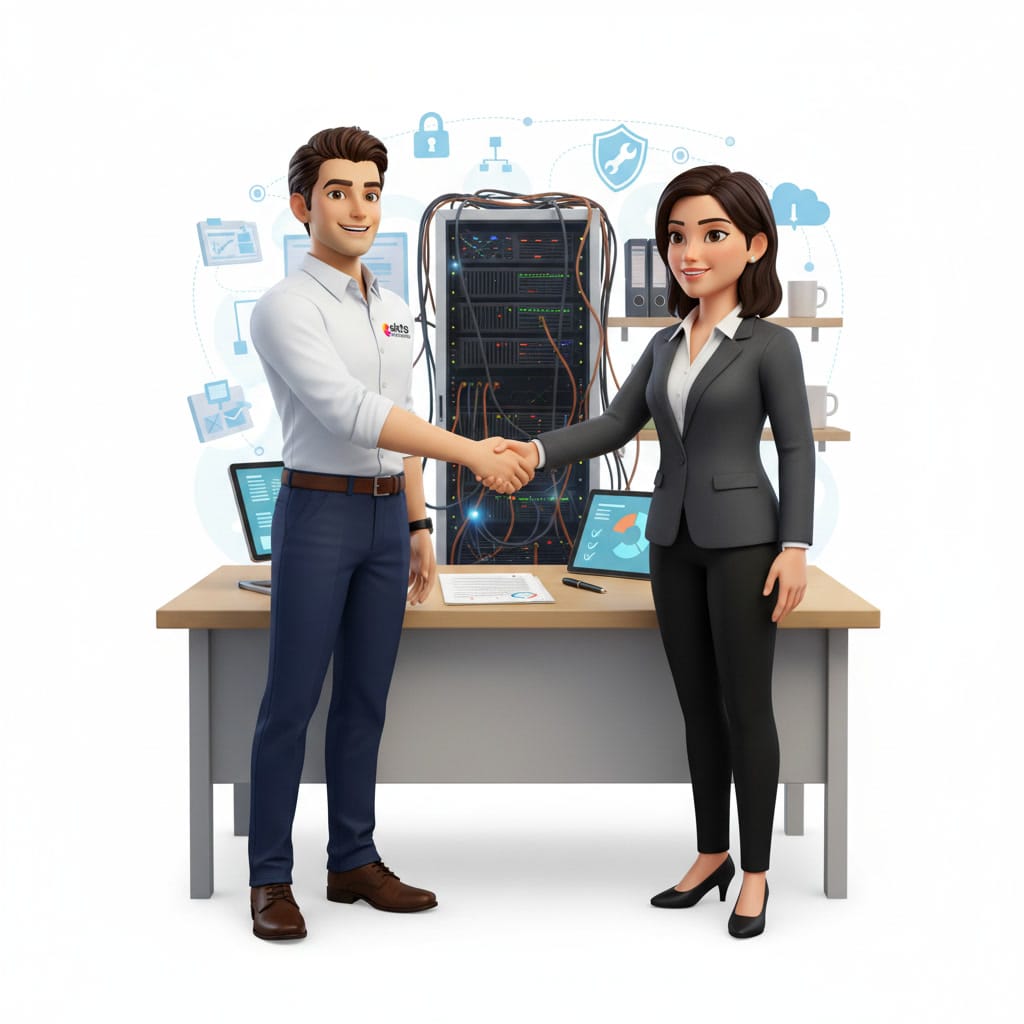
The technical term behind all this is "MCP," for Model Context Protocol. No need to memorize the acronym: the idea is simple. A connector is a standardized bridge between AI and software. Rather than asking an employee to download a contract, open it, paste it into Claude, and then copy the response, the connector allows the assistant to read (and sometimes write) directly from the authorized application.
The advantage is twofold. On the one hand, manual manipulation and copying errors are avoided. On the other, the AI works with the organization's actual data, not with an extract taken out of context. Anthropic also points out that several of these connectors and toolkits are open source, which allows for adaptation by those with the necessary technical skills.
This approach of bridging the gap between AI and your existing tools goes far beyond legal considerations. It's precisely the kind of integration we explore for our clients when it comes to securely automating repetitive tasks. If this topic resonates with you, our managed IT services include this assessment and structured implementation.
3. Why an SME should be interested (even without in-house counsel)
One might think that this announcement only concerns large firms. This is false. Most Quebec SMEs manage documents with legal content without having a legal department: service agreements, commercial leases, contracts with suppliers, confidentiality policies related to Bill 25, terms of use, non-disclosure agreements.
What this wave of tools signals is that reviewing and preparing these documents are becoming tasks that AI can significantly accelerate. In concrete terms, for a company in the Mauricie region or elsewhere in Quebec, this could mean:
- quickly identify unusual clauses in a supplier agreement before signing;
- compare two versions of a contract and highlight the differences;
- prepare a first draft of an internal policy, to be validated later by a professional;
- to find specific information in a mountain of documents stored in Box or SharePoint.
However, a word of caution: speeding up does not mean replacing human judgment. AI produces a draft or initial analysis. The final decision, especially when there are legal or financial consequences, remains that of a responsible individual, ideally supported by legal counsel.
4. Precautions not to be overlooked
Connecting AI to your most sensitive documents is not a decision to be taken lightly. Three points deserve serious attention.
Data confidentiality
A contract or file often contains personal information and sensitive business data. Before authorizing a connector, it's essential to know where the data goes, who has access to it, and how long it's retained. In Quebec, Bill 25 already governs the protection of personal information, and the arrival of AI does not change these obligations.
Human validation
AI can make mistakes, misinterpret a clause, or invent a reference. In law, an error can be costly. The golden rule remains the same: human validation, AI assistance. No legally binding document should leave your company based solely on automatically generated text.
Access control
Granting a tool access to your platforms is like opening a door. It must be managed as such: permissions limited to the bare minimum, action logging, strong authentication. This is precisely the kind of framework an IT partner puts in place to avoid unpleasant surprises.
Frequently Asked Questions
Can Claude replace a lawyer?
No. Claude can expedite the research, review, and drafting of documents, but he bears no professional responsibility and may make mistakes. He serves as an assistant for a first draft or quick analysis, never as the final decision-maker on a legal matter.
Are these new legal tools accessible to a small business?
Anthropic states that the connectors and kits are offered to its paying customers. An SME can therefore access them, but the real issue isn't the price: it's connecting AI securely to your tools, with the right access controls and compliance with Bill 25.
Will my data remain confidential with these connectors?
It all depends on the configuration and the provider's terms and conditions. It's essential to verify where the data is processed, who has access to it, and how long it's retained before connecting AI to sensitive documents. IT support can help validate these points.
Putting legal AI at the service of your SME, without unnecessary risk
Claude's arrival in the legal field highlights a fundamental trend: AI is moving beyond the chat window and becoming integrated into the software that businesses actually use. For SMEs, this presents an opportunity to streamline time-consuming tasks like contract review, provided they maintain control over confidentiality and validation. At OKTO Solutions, we help businesses in Trois-Rivières and elsewhere in Quebec adopt these tools in a structured way: explore our managed IT services or contact us through our contact to discuss your needs.
Sources: TechCrunch · LawSites (LawNext) · Anthropic · OKTO Solutions