
QR codes are everywhere: on restaurant menus, parking signs, bills, and payment terminals. We scan them without thinking, almost reflexively. It's precisely this habit that fraudsters have been exploiting for the past few months with a new technique called quishing, or QR code fraud. The principle is simple and insidious: a fake QR code redirects you to a fraudulent website that steals your login credentials or installs malware on your phone.
For a small or medium-sized enterprise (SME) in Trois-Rivières or the Mauricie region, the risk is very real. Just one employee scanning a fake code received by email, and the entire company's email system, or even Microsoft 365 accounts, could fall into the wrong hands. Here's how QR code scams work, why small businesses are prime targets, and most importantly, how to protect yourself effectively.
Quick answer: A QR code scam (quishing) involves tricking you into scanning a fake code that leads to a malicious website designed to steal your passwords or infect your device. To protect yourself: never scan a QR code received in an unsolicited email, always verify the website address before entering a password, and enable two-factor authentication on all your accounts.
1. What is a QR code scam (quishing)?
The word "quishing" comes from combining "QR code" and "phishing." Rather than sending you a clickable link, as in traditional phishing, the fraudster inserts a QR code image into an email, poster, or letter. When you scan it with your phone, you are redirected to a fake website that perfectly mimics a legitimate login page, such as that of Microsoft 365 or your bank.
Why does this method work so well? Because QR codes bypass many standard security measures. A spam filter analyzes text links in an email, but a QR code image often slips through the net. Furthermore, the scan is usually performed on a personal phone, a device often less secure than a desktop computer and outside the scope of the company's security tools.
The most common scenarios mimic an emergency or authority situation: a fake password reset notice, a fake unpaid bill, a supposed Microsoft security update, or even a fake parking ticket with a code to scan for payment. The goal is always the same: to create a sense of urgency to short-circuit your judgment.
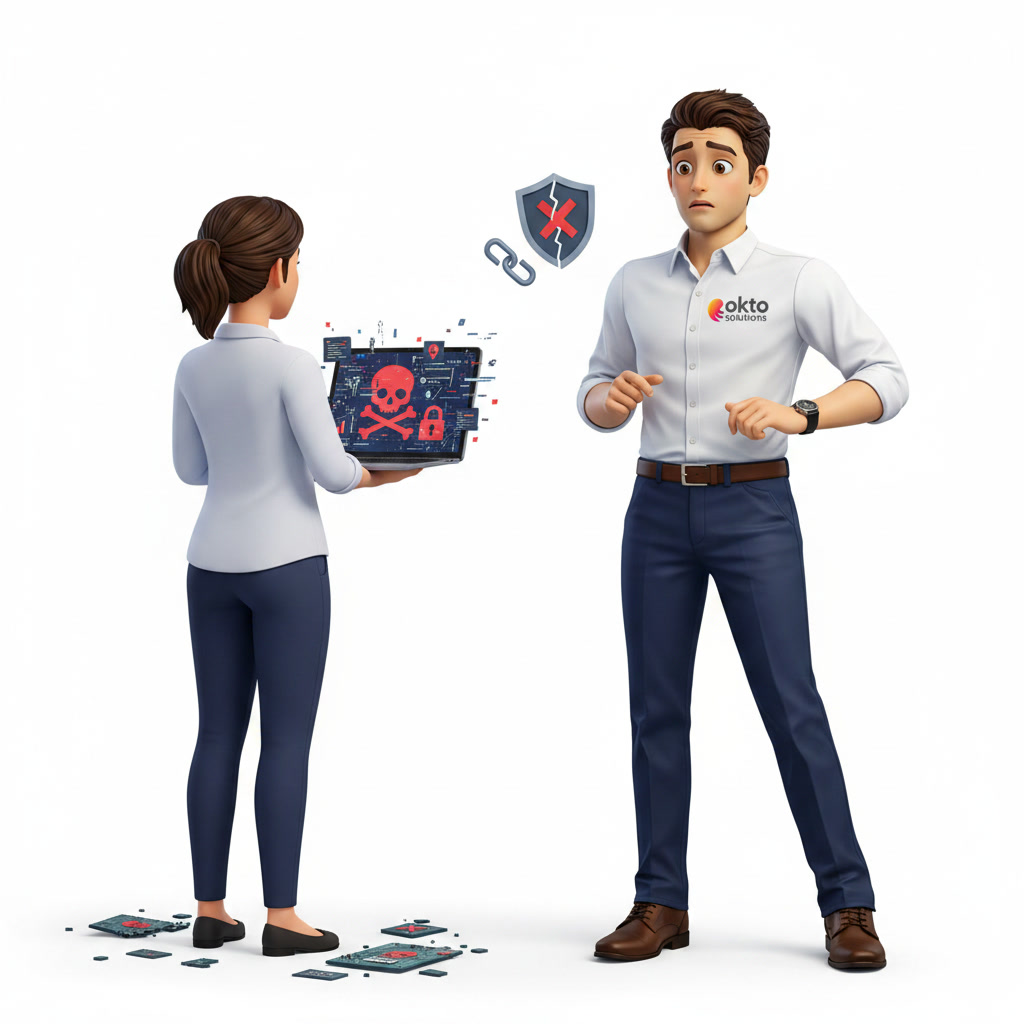
2. Why SMEs in the Mauricie region are prime targets
It's often believed that only large corporations are of interest to fraudsters. This is false. Small and medium-sized enterprises (SMEs) in Quebec are specifically targeted because they rarely have a dedicated IT team or ongoing cybersecurity training. A QR code scam costs almost nothing to launch and can be sent to thousands of addresses at once.
In Trois-Rivières, as elsewhere in the Mauricie region, many SMEs use Microsoft 365 for their emails and documents. It's an excellent tool, but it's also the number one target for these scams, because a single compromised account provides access to emails, calendars, shared files, and sometimes even communications with clients and suppliers.
- Few SMEs provide regular training for their employees on new frauds.
- Personal phones are often used for work, without company protection.
- A hacked email account opens the door to bank transfer fraud.
- The repercussions on customer reputation can be severe.
This is why support from a local partner makes a real difference. Our managed IT services include account monitoring, secure configuration of Microsoft 365, and raising team awareness about these kinds of threats.
3. How to recognize a QR code scam
The good news is that QR code scams almost always leave clues. Learning to spot them takes just a few minutes and can prevent disaster. Here are the signs that should immediately alert you.
Warning signs to watch for
- An unsolicited email that contains a QR code to scan, especially if it mentions an emergency or a threat of account closure.
- A sender whose address does not exactly match the displayed company name.
- A QR code stuck over another one, on a poster, a payment terminal or a physical invoice.
- A request for connection or payment after the scan, even though you did not initiate anything.
- French spelling mistakes, a blurry logo, or a sloppy layout.
The most important thing to remember: after scanning a code, always check the full website address before typing anything. If the address doesn't begin with the organization's actual domain, close the page. A legitimate Microsoft website, for example, will never have a strange address filled with unrelated numbers and words.
4. The right steps to protect your business
Protecting yourself against QR code scams doesn't require complicated investments. It's mainly about good habits and a few well-configured settings. Here are the most effective measures that every Quebec SME should implement right now.
- Enable two-factor authentication (MFA) on all your Microsoft 365 accounts, emails, and banking accounts. Even if a password is stolen, the fraudster won't be able to log in without the second code.
- Never scan a QR code received via unsolicited email. If the notification claims to be from Microsoft or your bank, go directly to the official website by typing the address yourself.
- Train your employees to recognize these pitfalls. A short awareness session twice a year greatly reduces the risk.
- Keep your devices up to date. Security updates fix the vulnerabilities that these scams try to exploit.
- Use a password manager. It won't automatically fill in your login details on a fake website, which is a great red flag.
These measures form the basis of good digital hygiene. To go further, an IT partner can implement proactive monitoring and advanced email protection, two elements that are difficult to manage alone when running a business.
5. What should be done if an employee has scanned a fake QR code?
If the damage is already done, speed is your best ally. Every minute counts to limit the damage. Here are the steps to take without delay.
- Change the password for the account in question immediately, from a secure device.
- Verify that two-factor authentication is enabled and that no new, unknown devices have been added to the account.
- Notify your IT manager or IT service provider to analyze the extent of the incident.
- Monitor emails sent without your knowledge, a frequent sign that an account has been compromised.
- Notify your contacts if you suspect that fraudulent messages have been sent in your name.
A structured response makes all the difference between a contained incident and a major data breach. This is precisely the kind of situation where it's best to have support. You can contact us through our contact page for a rapid response anywhere in the Mauricie region.
Frequently Asked Questions
Can a QR code really install a virus on my phone?
A QR code itself does not contain a virus, but it can direct you to a website that attempts to install a malicious application or steal your data. The danger always comes from the webpage it leads you to, not the code itself.
How can you tell if a QR code is safe before scanning it?
Be wary of codes received via unsolicited email or pasted over others on a poster. After scanning, your phone usually displays the website address before opening it: verify that it matches the expected organization before proceeding.
My company uses Microsoft 365, am I protected against quishing?
Microsoft 365 offers protections, but these must be properly configured and complemented by two-factor authentication and employee vigilance. A security configuration tailored to your specific situation remains essential to minimizing risk.
Protect your Trois-Rivières SME against QR code fraud
QR code scams are evolving rapidly, but a well-prepared SME has nothing to fear. At OKTO Solutions, we support businesses in Trois-Rivières, the Mauricie region, and throughout Quebec to secure their emails, Microsoft 365 accounts, and train their teams to deal with emerging threats. Discover our managed IT services or contact us today through our contact to have your company's security assessed. A small step today can save you big headaches tomorrow.